
Palmdale, a city in LA County, California, known as the “Aerospace Capital of the Air,” has over 1000+ homes with swimming pools currently for sale at any given time. And California itself has 1.4+million residential pools, which is more than any other U.S. state. With so many pools in the community, chlorine exposure is a regular part of life for many Palmdale households. And if you’re a homeowner with a pool, you’re probably familiar with the sharp, chemical odour clinging to your clothes after swimming or doing laundry. The smell is most likely chlorine. Chlorine is used to keep pool water clean and safe, but it can damage fabrics. It usually leaves strong smells and discoloration that a normal wash does not remove. This blog post will explain how to remove chlorine smell from clothes using methods that work well in Palmdale’s hard water and high pool ownership area. We’ll also cover professional solutions available at local coinless laundries.
Why Do Clothes Retain a Chlorine Smell?
The Chemistry Behind Chlorine Odor
Do you know why clothes hold onto chlorine smell and why Palmdale’s water conditions make the problem worse? Chlorine is among one of the most widely produced chemicals in the United States because it is very effective at killing harmful bacteria in pool water. What you smell is not pure chlorine but a mix of Chloramines, which form when free chlorine mixes with substances like sweat, body oils, and other organic matter that swimmers introduce into the pool. These chloramine compounds attach tightly to fabric fibres through an oxidation process. Unlike regular dirt that stays on the surface, chlorine residues soak deep into the fabric fibres. This makes them almost impossible to remove with regular detergent alone. The problem can get worse because chlorine is highly oxidizing, meaning it damages almost everything it touches, including the individual fibres in your clothes. Over time, chlorine slowly breaks down the fabric until it becomes thin, weak, and more likely to tear or fall apart.
Why Palmdale’s Water Makes It Worse
Palmdale, CA, tap water is moderately hard water. It averages around 157 parts per million (about 9.2 grains per gallon), with some reports ranging from 112 to 162 PPM depending on the water source and treatment. Hard water has high levels of dissolved minerals, mainly calcium and magnesium. These minerals settle onto fabric fibres during the wash cycle. These mineral deposits act like a tiny barrier. They trap chloramines and other residues in the fabric and keep them from rinsing out properly. As a result, clothes can still smell like the pool even after several washes. This is especially common in summer when people use the pool more and do more laundry.
Learn more about how hard water ruins your linens here: https://coinlesslaundry.com/is-hard-water-ruining-your-linens-how-commercial-laundry-services-fix-it/
Common Sources of Chlorine Smell in Palmdale Homes
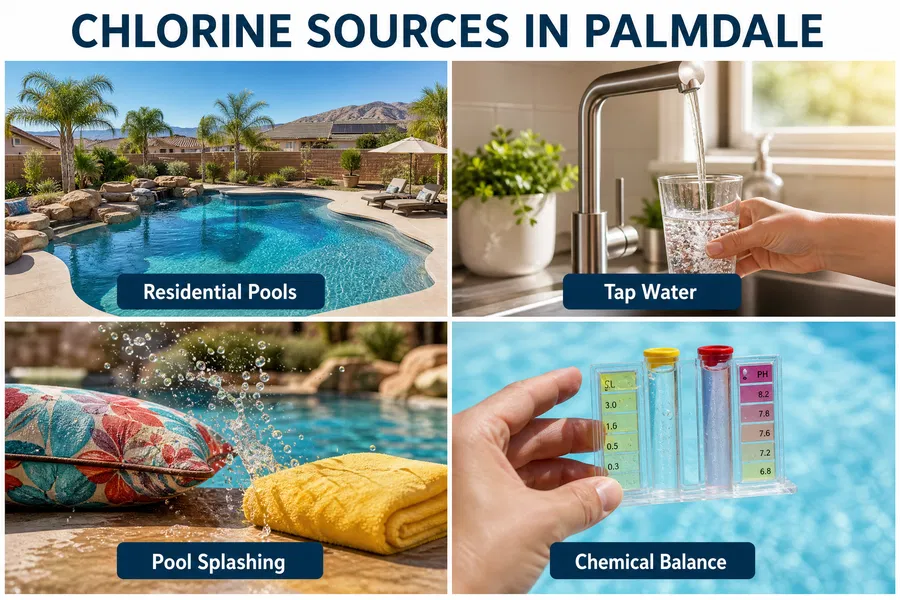
- Residential Swimming Pools: Residential swimming pools are a major source. With more than 1000+ homes with pools listed for sale, pool ownership is much higher than the national average.
- Municipal Tap Water Treatment: Municipal tap water is another source. Palmdale’s water is treated with chlorine to disinfect it and stays below the EPA limit of 4mg/L. Chlorine can be smelled at levels as low as 1mg/L.
- Pool Splashing: Pool water usually splashes onto patio furniture, outdoor cushions, clothes, and towels during swimming and parties.
- Improper Pool Chemical Balance: When pool chemicals are not balanced properly, if chlorine goes above 13 ppm or pH moves outside 2-7.6, the chlorine becomes more aggressive and damages fabric more easily.
How to Remove Chlorine Smell from Clothes?
1. Immediate Post-Swim Rinse
The most effective way to prevent chlorine smell is to rinse clothes that have been in the pool within 15 minutes of exposure. Doing this simple rinse can reduce how much chlorine the fabric absorbs by up to 60% compared to waiting an hour or longer.
2. Triple Rinse Method
This is the name of the specific rinsing technique, which includes these steps:
- Rinse the clothes under cold running water for one minute.
- Gently squeeze out the extra water. Do not wring or twist the fabric
- Repeat the rinse two more times.
- After that, either wash the clothes or hang them to air dry.
This method works because the fabric fibres are already full of clean water, so there is less space for chlorinated pool water to soak in.
3. White Vinegar Soak
White vinegar is the easiest and most effective gold standard household solution for removing chlorine smell. The acetic acid in the white vinegar (usually about 5%) reacts with leftover chlorine, neutralizes it, and turns it into odourless compounds.
How to Use Vinegar for Chlorine Removal
For Small Loads (1-2 Items)
- Mix1 ¼ cup of white distilled vinegar with each gallon of cold water
- Soak the clothes in this mixture for 30 to 60 minutes
- Rinse the clothes well with cold water afterward
- Wash them as usual with detergent
For Large Loads
- Add ½ to 1 cup of white vinegar directly into the rinse cycle.
- If the smell is especially strong, also add ¼ cup of vinegar to the wash cycle.
- If your machine has a double rinse option, use it.
Important Safety Notice: Never mix vinegar with bleach or hydrogen peroxide. Mixing them creates toxic chlorine gas that can burn the eyes, nose, throat, and lungs. Always make sure the clothes have gone through at least one full circle rinse cycle before using vinegar. At these amounts, vinegar is safe for most fabrics and will not damage colors. The vinegar smell goes away completely once the clothes dry, leaving the fabric fresh and free of odor.
4. Baking Soda Deodorizing Treatment
Baking soda works in different ways from vinegar. It is mildly alkaline, so it absorbs and traps odor compounds instead of chemically neutralising them.
How to Use the Baking Soda:
- Add ¼ to ½ cup of baking soda to the wash cycle aligned with your regular detergent.
- For strong odors, make a soak by adding ¼ cup of baking soda to a sink filled with cold water.
- Soak the clothes for 15 to 30 minutes, then wash them as usual.
- This method is safe for colored fabric and will not cause fading.
Pro Tip: For the best results, use baking soda and vinegar one after the other, not at the same time. Wash first with baking soda, then run a second rinse cycle with ¼ cup of vinegar. Adding them at the same time makes them cancel each other out and removes the benefits of both.
Vitamin C (Ascorbic Acid) Neutralization
Professional swimmers and swim teams use vitamin C to neutralize chlorine as soon as it touches the skin or fabric. Sodium ascorbate (vitamin C powder) works especially well because it dissolves in water and does not leave any residue.
How to Use Vitamin C:
- Dissolve 1 teaspoon of vitamin C powder in 1 cup of water.
- Spray or soak the affected areas of the clothes before washing them.
- For rinsing the whole body after swimming, mix 1 teaspoon of vitamin C powder in 1 cup of water and pour it over the skin before showering.
- Vitamin C powder is available at health food stores or online. Buying it in bulk is usually the most effective option.
Powerful Natural Remedies to Remove Chlorine Smell from Clothes
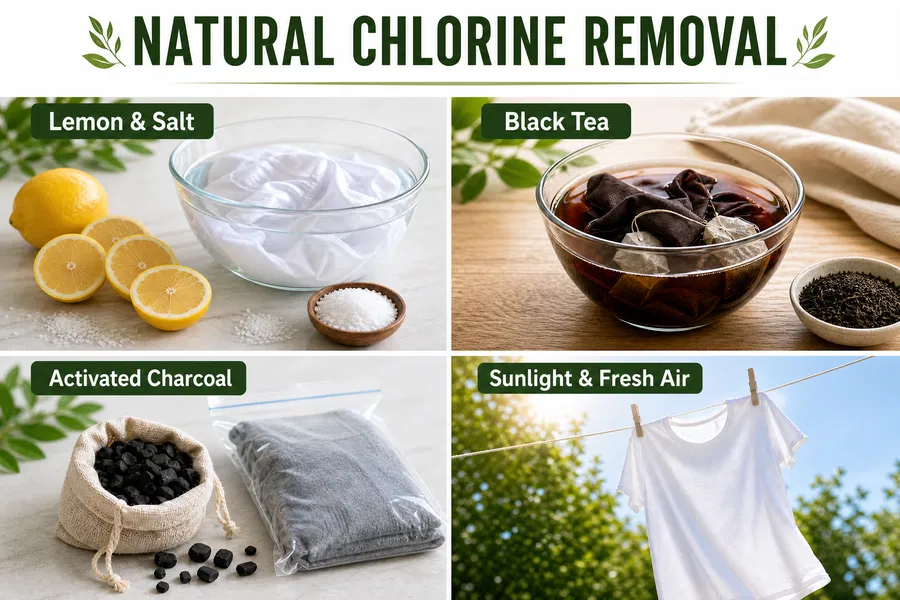
Vinegar and baking soda are the strongest home options, but these natural methods can help with mild chlorine smells or as a final step after other treatments.
A. Lemon and Salt Pre- Soak
- Squeeze the juice of 2 lemons into 3 litres of cold water.
- Add 2 tablespoons of salt
- Soak the clothes for 45 to 60 minutes
- Then wash them with a mild detergent
B. Black Tea Bath for Dark Fabrics
- Brew strong black tea using 3 to 4 tea bags per quart of water.
- Let the tea cool completely.
- Soak the dark clothes in the cooled tea for 30 minutes
- The tannins in the tea help restore color while neutralizing chlorine
C. Activated Charcoal Odor Absorption
Put dry activated charcoal into a cloth pouch. Put the smelly clothes in a sealed bag with the charcoal pouch and leave them overnight. This method is useful for items that can’t be rewetted, like clothes with wild, delicate decorations or structured garments.
D. Fresh Air and Sunlight
- Hang the clothes outside on a day with a good breeze.
Chlorine compounds are volatile, so they evaporate when exposed to moving air. - Sunlight speeds up the process.
- This works best as a finishing step after using one of the stronger methods listed earlier.
How Coinless Laundries Remove Chlorine Smell
Commercial washing machines are a superior choice for coinless laundry businesses for chlorine removal. They use 2-3 times more water than domestic machines, ensuring that the fabric is thoroughly rinsed and chlorinated waste is physically removed from it. Moreover, a commercial washer often has a double or triple rinse cycle option that allows for removing neutralized chlorine compounds to the desired extent. These machines also allow you to set the water temperature. That way, it does not linger in the washing drum after the cycle is completed, thus avoiding unpleasant odors that are difficult to get rid of.
Special additives, including sodium metabisulfite, can be used to absorb chlorine directly from water right after it has been removed from the fabric. In any case, these cleaning technologies are far more effective than domestic machines. That is why people who want to remove chlorine smell from their clothes should choose commercial washers over domestic machines.
Are you tired of re-washing pool towels and swimsuits that smell like chlorine even after multiple washes? Bring your next load to our CoinLess Laundry at 565 E Palmdale Blvd, CA 93550 and let our commercial machines remove chlorine smell in a single wash. No coins needed, just fast, clean, card-operated laundry near your location.