
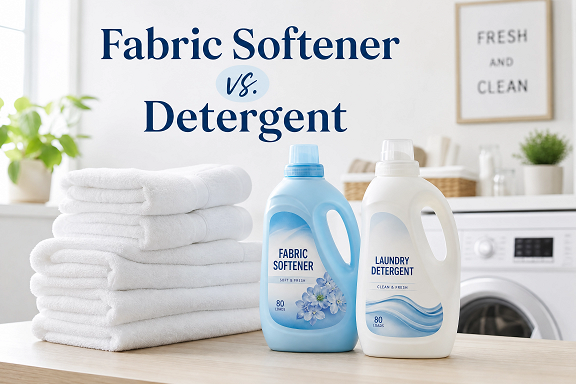
Um… a direct, one-word answer to that question would be “No”. Fabric softener does not clean clothes, but its job is to act as a fabric conditioner. Detergent is the product that is responsible for removing dirt and stains; fabric softener does not have the cleaning power. Detergent is the one that removes dirt and washes away all types of dirt, sweat, oils, and stains. Fabric softener is used in the rinse cycle, and what they do is leave a thin lubricating film on the fibres. It coats the fabric to make clothes feel softer, cut down on static cling, and add a bit of scent.
Fabric softener improves textures and fragrance, but it does not clean or remove the dirt that is already in the clothes. This blog post is all about how fabric softener works, what it does not do, which fabrics benefit from using it, and when skipping it might be the best idea. So stick with us till the end.
If Fabric Softener Does Not Clean Clothes, Why Do Many People Think It Does?
If you walk into any stores, you’ll see shelves lined up with detergents, scent boosters, and stain removers. Bleach alternatives and fabric softeners. This visual setup makes it easy to think that all of them serve similar purposes. Companies have long advertised these products as a necessary step in a complete laundry process. Over time, people start treating all laundry products as doing roughly the same job. The lines between them become blurred in everyday thinking.
The laundry routine is simple: Add detergent, add softener, start the machine, and expect clean clothes. The Thai routine reinforces the idea that everything added helps with cleaning. This routine leads to the false belief that every product poured into the washer contributes to cleaning it. Fabric softener is added during the rinse cycle, long after the detergent has done the cleaning. By then, the dirt had already been removed or not. After using a towel, you notice softness, a nice smell, and a fresh appearance right away. These are the effects people pay attention to.
What is the Real Job of Fabric Softeners?
The best way to understand fabric softener is to examine the different stages inside the washer. This approach makes the explanation easy to follow. In the main washing cycle, detergent mixes with water and surrounds all types of dirt, body oils, food, sweat, and other soils on clothes. The washing machine’s activity helps lift the dirt away from the clothes. The dirty water is then drained out, removing the soil. Fabric softener operates in a totally different way from detergent. Fabric softener does not remove dirt; it deposits a thin layer on the fibres that makes clothes feel softer and reduces static.
Here’s what fabric softener is designed to do:
| What It Does | What You’ll Notice |
| Coats fabric fibers | Clothes feel smoother |
| Reduces friction between fibers | Less stiffness |
| Reduces static electricity | Fewer clothes cling together |
| Adds fragrance | Laundry smells fresher |
| Helps reduce wrinkles | Some garments come out looking less creased |
How Can You Tell If Fabric Softener Is Causing Problems?
Many laundry issues can have several reasons, but certain signs often indicate that the fabric softener or other products are building up. Your laundry routine may need adjusting if:
- Towels that feel soft after washing but absorb water poorly are a classic sign of fabric softener buildup.
- Clothes that start smelling quickly again after washing indicate residue from softener trapping bacteria and sweat.
- White or powdery streaks on dark clothes after drying can come from fabric softener residue.
- A slippery or waxy texture on dark clothes after drying can come from fabric softener residue. A slippery or waxy texture on clean clothes is a common symptom of too much softener buildup on the fibres.
- If the softener compartment in the washing machine feels sticky or has buildup, it shows the product is not rinsing away cleanly.
- A bad or musty smell in the machine, even after running empty cycles, can be caused by softener residue, encouraging mold or bacteria.
- A single symptom does not necessarily mean fabric softener is responsible; it could have other causes.
When multiple signs appear at the same time, it is much more likely that fabric softener or product buildup is contributing to the problems.
What Happens Inside the Washer When You Add Fabric Softener?
Fabric softener does not clean or remove dirt, but uses chemical properties to remove dirt and soften the fabric. Most liquid fabric softeners include special chemicals known as cationic surfactants. These are the active ingredients that do the main work. The positively charged molecules in fabric softener are drawn to the naturally negatively charged surfaces of fabric fibres. This attraction is the first step in how it works. After attaching to the fibres, these molecules form a very thin, slippery coating on the fabric, which reduces how much the fabric rubs against itself in the dryer and during normal use. Less friction means less static and a smoother feel.
It results in:
- Fabric feels smoother
- Static electricity decreases
- Wrinkles may be less noticeable
- Clothes slide against each other more easily
The coating mechanism is a smart process, but it also shows that softeners can be problematic for certain types of fabric. Certain fabrics are designed to work because of their natural rough or absorbent texture. Adding a coating can interfere with that function. Bath towels work well because of the small gaps between fibres that allow them to absorb water.
Why Do Towels Stop Absorbing Water After Using Fabric Softener?
Loss of absorbency in towels is one of the most frequent issues people notice after long-term use of fabric softeners. After using it, the towels often feel very soft and fluffy to the touch. This is the main benefit people enjoy. Instead of soaking up water effectively, the towel just moves the water around on your skin. The towel itself is not worn out or defective, nor is its quality. Each time you use fabric softener, it deposits a thin coating on the cotton fibres of the towel. With repeated use, these thin layers accumulate on the fibres. The buildup happens gradually over many washes. The towel may still look and feel soft and fluffy, but the cotton loops lose their ability to absorb water because of the coating.
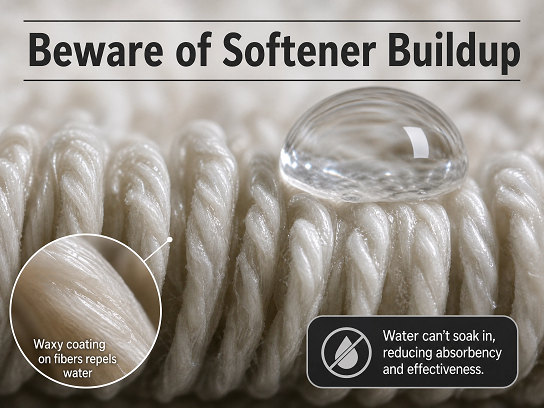
Professional places like hotels, gyms, and spas often avoid fabric softeners on towels. They prioritise performance over softness. For these businesses, how well the towel dries someone is more important than how soft it feels. If the towels stop absorbing water well, the towels are probably not worn out. The laundry products being used are more likely the cause. The real issue is the combination of products and habits in your regular laundry routine.
Is Fabric Softener Even Worth Using?
Yes. Fabric softener is still useful and appropriate for many households when the main goal is to have a softer feel, less static cling, and a nice fragrance. These are the practical examples of items where fabric softener usually provides clear benefits without major downsides. For towels, performance fabrics, and specialty items, it’s smarter to check the care label first instead of using softener. Choosing whether to use fabric softener should depend on the specific items in each laundry load.
Quick Tip
If your towels have become soft but don’t dry you very well anymore:
- Stop using fabric softener for a few wash cycles. This allows the built-up coating to gradually wash out.
- Use only the amount of detergent suggested on the package. Too much detergent can also leave residue.
- Use warm water for washing towels when the label permits it. Warm water helps remove residue better than cold water.
- Don’t overload the washing machine. Leaving space allows water and detergent to move around the towels properly.
In many cases, these simple changes can bring back a good amount of the towels’ absorbency. You may not need to buy new towels.
Can Too Much Fabric Softener Cause Issues?
Yes. Adding extra fabric softener does not make clothes even softer. The recommended small amount exists because fabric softener leaves a coating on the clothes that does not fully rinse away. Using more than recommended over many washes causes a buildup of residue on the clothes and inside the machine. This accumulation is the root cause of many problems.
That buildup can cause several issues:
| Laundry Problem | Why It Happens |
| Towels stop absorbing water | Fibers become coated |
| Clothes feel waxy | Residue collects on the fabric |
| Workout clothes hold odors | Coating traps oils and sweat |
| The washer-dispenser becomes sticky | Softener residue dries inside the compartment |
| White streaks on dark clothes | Excess product doesn’t rinse away completely |
Where to Find Good Laundromats in Arizona?
CoinLess Laundry is one of the well-known laundromats in Arizona. At CoinLess Laundry, you’ll find clean, high-capacity self-service washers and dryers dedicated to handling everything from everyday clothing to large household items. With spacious machines and convenient payment methods, along with well-maintained stores in 50+ locations, doing laundry has become easier.
Whether you’re washing a week’s worth of family laundry or tackling bulky bedding, having the right tools is just as important as choosing the right laundry product. Contact our team at any of our locations in Arizona. Locate our nearby store using our store locator, and find the nearest Sterling Wash & Fold by CoinLess Laundry location.
Frequently Asked Questions (FAQs)
Q.1. Does fabric softener replace laundry detergent?
No. The detergent is what cleans your clothes. The fabric softener is responsible for changing the properties of the fabric.
Q.2. Can you use fabric softener in every wash?
Yes, but it is not advisable to use it on all types of fabrics. Towels, microfiber cloths, and moisture-wicking sportswear are usually better off not using fabric softener.
Q.3. Why do towels lose their ability to absorb water?
Because of repeated accumulation of fabric softener and detergent residue, which prevents the cotton fibers from absorbing moisture.
Q.4. Will the fabric softener help me get rid of stains?
No. All stain removal takes place during the wash process by means of the detergent and sometimes a special stain remover.
Q.5. Can excess fabric softener damage the clothes?
The immediate damage is unlikely, but the accumulated fabric softener may influence the ability of certain types of clothes to absorb moisture and function properly.
Q.6. Will fabric softener help decrease the amount of static in clothes?
Yes. One of the main functions of the fabric softener is to reduce the static electricity in the fabric by coating the fibers and decreasing the friction.
Q.7. Can I use fabric softener in a self-service laundromat?
Yes, you can use fabric softener in a self-service laundromat, but remember to put it into the fabric softener compartment and not just pour it on your clothes.