
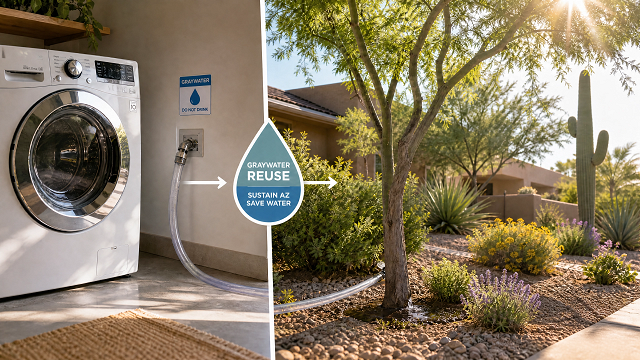
Resusing laundry water for your yards sounds like a clever way to save water in a state like Arizona. However, it is not as easy as just connecting a hose from the washing machine to the yard. Under the Arizona Department of Environmental Quality (ADEQ) rules, residential graywater reuse is governed under a Type 1 General Permit. Arizona allows laundry water to be reused but only under certain conditions and to conserve water. We will discuss those further down in the blog. Those rules exist because detergents, soil contact, which plants you water, and how deep the groundwater is all affect safety when you use wash water in the outside environment. People are looking for simple ways to use less water in their daily life. One popular idea is reusing graywater from the washing machine to water plants instead of sending it down the drain. But there are official state rules to protect people’s health, underground water, and nearby properties.
This blog post explains what laundry graywater is, where you can legally use it, what mistakes to avoid, and the best ways to do it safely in Arizona.
Did You Know?
Arizona has allowed many residential graywater systems without a permit for more than two decades, provided homeowners follow the state’s best management practices.
What is Laundry Graywater/Greywater?
Graywater/greywater is gently used water from household sources like sinks, showers, and washing machines. Water from the washing machine is considered graywater because it has soap, detergent residues, lint, and little dirt, but it does not include water from the toilet. Knowing the difference is super important because not every type of household water is allowed to be reused.
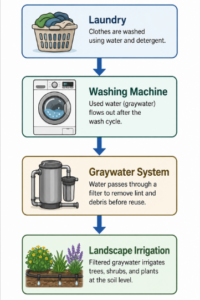
| Household Water Source | Graywater? |
| Washing machine | Yes |
| Shower | Yes |
| Bathroom sink | Yes |
| Kitchen sink | No* |
| Dishwasher | No* |
| Toilet | No* (blackwater) |
(*) According to some regulations and research definitions, kitchen sink and dishwasher are technically “graywater,” but many building codes treat them as “dark graywater” and exclude them from simple residential reuse because of grease, food particles, and higher pathogen risk.
Even though laundry graywater can be reused, it still has detergent chemicals, soap and organic stuff like dirt and lint in it. That is why Arizona has clear guidelines about how and where you can use the graywater. Following laundry safety tips is the least we can do as responsible citizens.
Where Can Laundry Graywater Be Used?
Laundry graywater is usually used to water decorative plants and mature tress in the yard. It works well when you pour it straight onto the soil so the plants can take in the water naturally.
Suitable uses includes:
- Trees
- Shrubs
- Ornamental Plants
- Mulched Landscape Areas
Some places should not be watered with graywater because they raise the chances of contamination. Even when you follow the rules,it is smart to keep graywater away from the parts of food plants that you eat. Arizona’s rules are made to limit exposure to greywater and protect the soil and underground water from harm.
| Generally Suitable | Generally Avoid |
| Trees | Leafy vegetables |
| Shrubs | Root vegetables |
| Ornamental plants | Areas with standing water |
| Landscape beds | Places where runoff can occur |
What Should Never Go Into a Graywater System?
Just because graywater comes from washing and is used to water plants does not mean any detergent additive must be harmless. Some ingredients in common products can damage soil or plants over time. This misconception leads homeowners to use the wrong products without realizing the long-term effects.
Certain chemicals in detergents, bleaches, and softeners don’t break down completely. Instead, they accumulate in the spill with each irrigation. It slowly keeps changing the composition of the soil. Over months or years, that buildup can harm plants. Alter soil pH or make the ground less able to absorb water.
So pay attention to products containing high levels of:
- Boron or borax
- Sodium-based compounds
- Chlorine disinfectants
- Certain fabric softeners
Laundry and Water Use by the Numbers
| Fact | Estimate |
| Share of indoor household water used for laundry | About 25% |
| Water used by older top-loading washers | 39–43 gallons per load |
| Water savings from many high-efficiency washers | Up to 50% less water |
| Residential graywater allowed under Arizona’s general permit | Up to 400 gallons per day |
Final Words
As Arizona continues to prioritize responsible water use and tackle ongoing water crises, state and local officials are encouraging everyone to use water more wisely across all parts of daily life. Even simple changes like choosing safer laundry products for a graywater system can contribute to that bigger goal when enough people make the effort. But those changes only help if they’re done correctly, following the state’s rules and recommendations to avoid unintended harm to soil or plants.
Water-saving habits start at home, but using the right machines and selective products is just as important. Whether you’re washing weekly laundry or oversized bedding, CoinLess Laundry offers high-capacity self-service washers in Arizona. Stop by your nearest location and see why local families have trusted us with their laundry needs in more than 50+ location across Arizona for more than 35+ years.
Frequently Asked Questions (FAQs)
Q.1. Is it legal to recycle the washing machine water in Arizona?
Yes. The State of Arizona allows homeowners to recycle washing machine greywater for irrigation on their property if some conditions are met. For most domestic households, there is no need for any permit if the recycling system complies with ADEQ practices.
Q.2. Will I have to get a permit for laundry greywater?
No, for most domestic households there is no need for any permit as long as the household meets Arizona’s general rules for domestic households and uses less than 400 gallons of greywater a day.
Q.3. Can greywater be used for fruit trees?
Yes. The State of Arizona allows the use of greywater for irrigation of fruit and nut trees provided that there is no contact between the greywater and the edible parts of the plants.
Q.4. Can I use laundry greywater on my veggies?
Not normally. The State of Arizona recommends against the use of greywater for the irrigation of vegetables and food crops as it reduces possible risks to your health.
Q.5. Is it okay to use bleach in the graywater system?
It might not immediately lead to any troubles with infrequent usage of chlorine bleach and products with high sodium or boron contents, but the frequent use will have an impact on the soil quality and plants in the long run.
Q.6. For how long can you store the graywater?
Graywater needs to be used right away. It may develop bacterial colonies and become odorous if stored for too long.
Q.7. Will all washing machines fit into the graywater system?
It’s not guaranteed since the compatibility of each machine depends on your plumbing system and the type of the graywater system to be installed.
Q.8. Can apartment residents utilize the laundry graywater?
No, they usually cannot. Apartment dwellers do not have access to the appropriate plumbing, and any changes will require the property owner/manager’s approval.
Q.9. How is the graywater different from the reclaimed water?
The graywater is the water used for light purposes, like washing machines, showers, and bathroom sinks. The reclaimed water is the wastewater that underwent purification in the municipality and was reused for irrigation or industrial purposes.