
Airbnb hosts have a lot to reset between guests, from bathroom cleaning, kitchen check-in, supplies restocking, fresh linens for beds, and so on. So running an Airbnb in Lincoln Ave, Anaheim, CA might seem like more of a logistics game than anything else. The listings had to look good, the reviews had to stay up, and somewhere between guest check-ins and check-outs, every sheet, towel, bath mat, blanket, mattress protector, pool or outdoor linens, and pillowcase in the property has to be clean, dry, folded, and back on the bed before the next guest arrives. For smaller vacation rentals, self-service Airbnb laundry services can help hosts manage this process, especially when several bookings overlap or a property needs a same-day turnover.
For Airbnb hosts managing multiple properties or frequent bookings, a structured laundry system or a reliable wash and fold arrangement can reduce delays, prevent running out of clean linens, and make it easier to keep a consistent look for guests.
This blog post explains how Airbnb services in Lincoln Ave can organise rental laundry, choose the right equipment, protect their linen inventory, and decide when it makes sense to outsource the work. And when you do decide to outsource your laundry, Sterling CoinLess Laundry offers commercial laundry services in 50+ locations across Arizona and California.
Take a look at what our customers have to say about.
| Use our Locator to find a store near your location: https://coinlesslaundry.com/locator/ |
What Makes Airbnb Laundry Harder Than Regular Laundry?
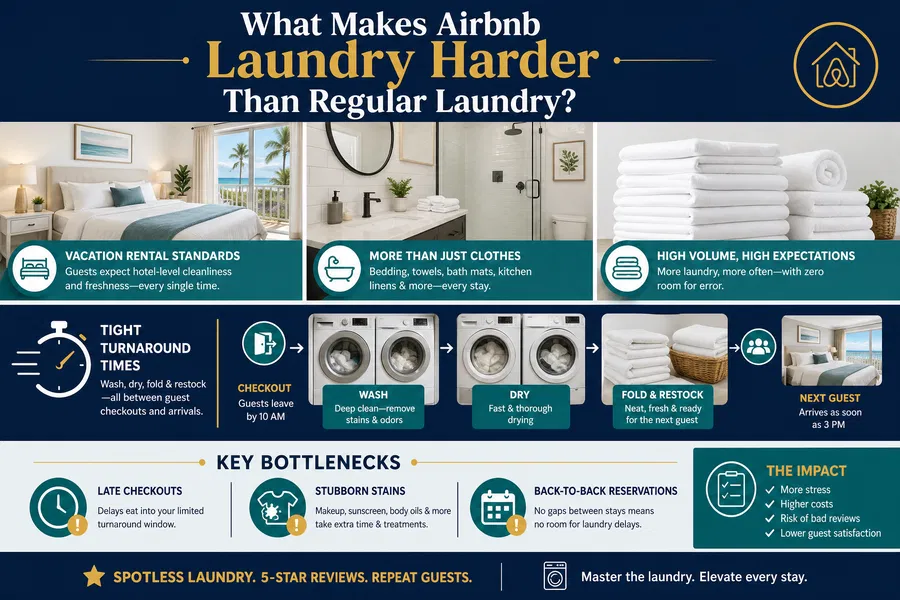
A normal household laundry routine is mostly flexible for people. If a load is not finished today, it can usually wait until tomorrow. Vacation rental laundry is harder because it is tied to a fixed check-in schedule. A typical turnover may require you to:
- Remove used sheets and towels
- Check for stains, damage, and missing items
- Separate linens by type and color
- Wash several loads
- Dry everything completely
- Fold and organize the clean items
- Remake the beds and restock the bathrooms
- Prepare the property before the next guest arrives.
It becomes even more difficult when the property has more than one bedroom, several bathrooms, or back-to-back reservations. A regular home washer and dryer may not have enough capacity to process all the linens in the time available. Even when the machines can handle the volume, the host or cleaner still has to pad, transfer, fold, inspect, and store every item. The laundry process can also become a bottleneck when:
A guest checks out late.
- A sheet or towel has a stubborn stain
- A dryer cycle takes longer than expected
- A comforter needs its own separate load
- A cleaner is handling several properties on the same day
- Clean backup linens are not available
- A washer stops working during peak hours
What Kind of Clothes Airbnb Hosts Need to Wash
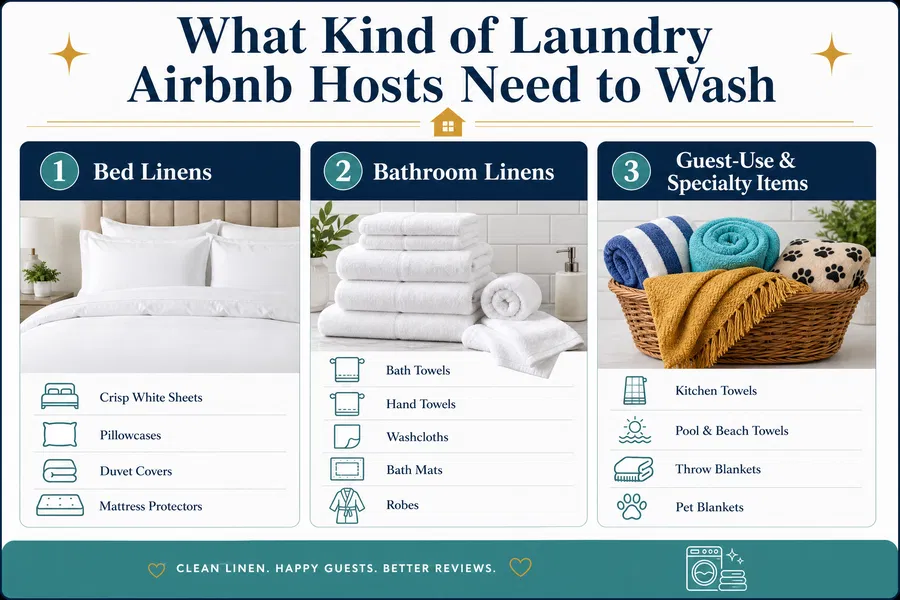
By categorizing the types of linens guests use, hosts can ensure that they choose the best washing machines, avoid mixing up loads, and locate missing items more easily.
Bed Linens
Typically, bed linens include:
- Fitted sheets
- Flat sheets
- Pillowcases
- Duvet covers
- Mattress pads and protectors
- Pillow protectors
- Lightweight blankets
White sheets and pillowcases are a staple in vacation-rental interiors because they add visual appeal and can be inspected for cleanliness. At the same time, white linens highlight makeup, self-tanner, food, drinks, hair products, and body oil.
Make sure to check each piece of linen, and if there are any spots on it, treat them before throwing the linens in the dryer, where moisture will set the stain in the fabric.
Bathroom Linens
The category includes:
- Bath towels
- Hand towels
- Washcloths
- Bath mats
- Makeup towels
- Robes
- Shower curtains or liners (if they can be washed)
Towels generate lint, so there should be enough space in the washing machine for them to move freely during the cycle; otherwise, towels will be less fluffy, damp, and poorly rinsed. Bath mats might have rubber backing that needs to be separated from other towels or may be made of a different material that requires special care.
Guest Use Towels
Depending on the property, hosts may also have to launder:
- Kitchen towels
- Oven gloves
- Beach towels
- Pool towels
- Throw blankets
- Pet blankets
- Baby bedding
- High chair or stroller fabric covers
- Outdoor cushion covers
It is best to keep pool towels and other heavily soiled items separated from bath towels and sheets. At the same time, sunscreens, chlorine, grass, sand, foods, and body oils affect different fabrics differently.
How to Create a System for Extra Sheets and Towels
The best way to ensure there are no last-minute catastrophes is to have extra linens and towels. Instead of buying exactly as many towels as needed for a single booking, it is better to have one set as a reserve that can be used if something is damaged or soiled beyond dry cleaning.
The Three Sets
A good rule of thumb is to have three sets of towels and sheets for every bed and bathroom.
- One set is in use
- One is clean and ready to be put on the bed
- One is being washed, stored, or held as a reserve
For example, if the host has one king bed in their property, they should have at least three sets of king-size sheets. If a place has two queen beds, there should be three sets for each bed, not three sets total.
The same goes for towels. If a two-bedroom property has to accommodate two guests, it still needs separate sets of towels for the bathrooms, including:
- Bath towels
- Hand towels
- Washcloths
- Bath mats
- Backup towels for stain removal
A three-set rule also applies to other guest-use towels, blankets, and pet bedding, depending on their size and how often they are used. The number of sets depends on:
- The number of bedrooms in the property
- Maximum occupancy
- Number of bathrooms
- How often the place is booked
- How often guests stay on the same day (whether there is a turnover the same day)
- Laundry facilities
- Whether there is a laundry service the host can use
- How fast sheets and towels can be bought if there are not enough clean ones
The key point is not to have one set for every guest. If the host is using all their sheets for a couple, one bad turn can leave them without any linen for the following guests.
Build a Linen Inventory Sheet
It is a good idea to create an inventory spreadsheet for every property.
Create a simple inventory for every property. Track:
- Type (fitted, flat, etc.)
- Size
- Color
- Quantity
- Location
- Purchase date
- Whether it needs to be replaced
The same information should be included for other textiles, such as towels. In addition, the sets should be labeled so the host knows which ones belong to which property. This is essential if someone manages more than one vacation rental and does not want queen-size sheets from one property to be confused with queen-size sheets from another.
Managing Same-Day Turnovers
Same-day turnovers require fast and efficient laundry work since the host has a limited amount of time to prepare the property for new guests. To do it right, follow these steps:
Step #1: Strip the Property Right Away
As soon as the cleaner finishes the turnover, take all the used linens, including:
- Beds
- Bathrooms
- Closets
- Sofas
- Laundry baskets
- Under beds
- Behind doors
- Outdoor furniture
- Kitchen and dining area
It is not hard to miss small items, such as washcloths, pillowcases, or kitchen towels. Check these spots several times during stripping to make sure nothing is left behind.
Step 2: Do a Visual Inspection Before Washing
Before tossing the linens in the washer, make sure to look for:
- Makeup
- Self-tanner
- Food and drink
- Blood
- Oil
- Grass
- Pet hair
- Ink
- Excess chlorine
- Pulls or holes
- Missing buttons or broken zippers
If there are any severe stains or damage, it is a good idea to take a photo. It will help you track what needs to be done later or decide whether it is worth using the item again.
Step 3: Sort Similar Items
A simple way of sorting includes the following categories:
- White bed linens
- Colored bed linens
- Towels
- Heavy or bulky items
- Delicates
- Heavily stained items
- Pet-related items
There are many ways to sort laundry, but the most important rule is to keep the system simple and easy to use. Make sure the cleaner can follow the same sorting rules every time.
Step 4: Put the Longest Cycles First
Typically, items that need more space or time to be cleaned end up at the bottom of the laundry pile because it takes longer to spin them dry. To maximize efficiency, start with:
- Comforters or other bulky items
- Towels and mats
- Sheets or duvet covers
- Pillowcases and other delicate items
For example, if the laundry service is a laundromat, make sure to pick a washer that will allow comforters to move freely. If the clothes are bunched up in a small tub, they will not be rinsed properly.
Step 5: Check if Everything Is Dry
If the sheets or towels are damp after the cycle, they will start smelling musty when stored in a closet or dresser. Before folding, check the corners of fitted sheets and thick towels, the edges of duvet covers and mattress pads, and the middle and edges of washcloths and bath mats. If these parts are damp or cool, continue drying; do not put the linens in the closet simply because their surface is dry. Especially in pool clothes, it can be hard to get rid of the smell if clothes are
kept damp for too long.
Read this blog to learn how to remove chlorine water smell from clothes: https://coinlesslaundry.com/remove-chlorine-smell-from-clothes-in-palmdales-suburban-laundry/
Step 6: Conduct a Final Inspection
During the last step, make sure there are no spots, lint, hair, wrinkles, pulls, or bad odors. Check if anything is missing, and then fold the linen in a consistent manner. By having a standard folding pattern, the host will save time because everything will be in its place when it is time to make the beds and stock bathrooms.
How to Prevent Lost or Mixed-Up Linens
Short-term-rental hosts deal with the risk of losing linens constantly. Items can end up in a washer, mixed with other laundry, taken by guests, or thrown away by cleaners who assume them to be damaged. To solve this issue, create a simple control system for your laundry. It can include the following steps:
Bag the Laundry by Property
If the host manages more than one rental, they should use bags to separate one property’s laundry from others. Make sure to write the following information on them:
- Name or identification code of the property
- Date
- Type of laundry
- Number of sets or items
- Special instructions regarding the laundry
Count Exceptions
If the inventory of sheets and towels is stable, the host does not have to count everything every time.
Instead, they can record exceptions, such as:
- Two fewer bath towels than usual
- One stained and one damaged duvet cover
- One faulty mattress pad that needs replacing
- One pillowcase with permanent self-tanner stains
Store Sets Together
Use shelves, cabinets, or boxes to store clean sheets and towels. It is a good idea to keep sets together rather than having sheets in one room, pillowcases in another, and towels in a third, unless there is a clear inventory tracking system.
Keep Guest and Personal Clothes Separate
If the host asks their cleaner to wash and dry their personal clothing, it should be done separately from guest towels and sheets. It reduces the chances of losing items, mixing up laundry, miscounting, damaging personal clothes, or contaminating guest towels with dry-cleaning chemicals.
Self-Service Laundry vs. Airbnb Laundry Service
| Factor
|
Self-service laundry | Wash-and-fold or outsourced service |
| Control | Host manages each step | Provider manages washing and folding |
| Cost | Often lower per load | Higher, but includes labor |
| Time | Requires travel, loading, drying, and folding | Reduces the host’s hands-on workload |
| Best for | One property or flexible bookings | Multiple properties or frequent turnovers |
| Scheduling | Depends on machine and store availability | Depends on provider capacity and turnaround |
| Inventory control | Host counts every item | Requires clear labels and instructions |
| Bulky loads | Access to commercial machines may help | Provider may handle volume more efficiently |
| Quality control | Host inspects items directly | Requires a documented inspection process |
Handling Common Airbnb Linen Problems
Makeup and Self-Tanner
- Pillowcases, wash clothes, and white towels usually show makeup and self-tanner stains.
- Inspect these items before putting them in the dryer. Pre-treating may be necessary, but always follow the fabric care instructions and test products first when appropriate.
- If a stain remains after washing, do not put the item back into guest use.
Foods and Drink Stains
Food stains are easier to manage when they are found early. Remove solid material carefully, rinse or pre-treat according to the fabric label, and avoid putting the item in a hot dryer until the stain has been checked.
Pet Hair
- If your rental allows pets, pet hair may collect on sheets, blankets, furniture covers, and towels.
- Remove as much hair as possible before washing.
- Excess hair can collect in the washer filter or transfer to other items. Use separate loads for heavily haired items where practical.
- Check whether a commercial laundry or laundromat accepts wet bedding before bringing it in.
Pool Towels and Chlorine
- Pool towels can carry chlorine, sunscreen, sand, and body oils
- These items should be separated from delicate bed linens whenever possible
- Rinse pool-exposed items promptly and avoid storing them when they are still damp
- A strong chlorine odor may mean the item needs extra rinsing or specialized treatment, although heavily damaged fabric may not be recoverable.
Persistent Odors
Odors can result from:
- Incomplete drying
- Damp storage
- Overloading the washer or dryer
- Using too much detergent
- Buildup of laundry products
- Contamination inside the pool or pets
- Do not simply cover the odor with fragrance
- Identify the source, wash the item correctly, dry it fully, and clear the storage area if necessary.
Final Thoughts
If you are looking for Airbnb laundry services in Lincoln Ave, contact CoinLess Laundry to confirm the services, turnaround options, equipment, and pricing available for your rental-linen needs. For self-service laundry, visit the location at 2806 W Lincoln Ave, Anaheim, CA 92801 after confirming store info and available machine options. Start with a simple linen checklist, track your inventory, and build a process that keeps every property ready for the next guest.
| Click on this link to explore the offers: https://coinlesslaundry.com/laundromat/lincoln/ |
Managing multiple loads of rental sheets and towels in Lincoln Ave, CA? Contact CoinLess Laundry to ask about available wash-and-fold or commercial laundry options for Airbnb and vacation-rental linens. If you prefer to handle the laundry yourself, visit our Lincoln Ave location and use the available commercial washers and dryers for your next turnover.
Frequently Asked Questions (FAQs)
Q.1. How many towels should an Airbnb host provide per guest?
It depends on the property, the length of stay, the number of bathrooms, and the host’s preferences. You should provide a set of towels, hand towels, and washcloths for each guest and have some spares for stains, unexpected needs, and laundry time.
Q.2. Should you wash rental linens in Airbnb after each guest?
Yes, you should wash all the linens, including sheets, pillowcases, towels, and other guest-accessible items, after each stay. Some decorative pieces, such as blankets, may have a different cleaning schedule.
Q.3. Can I wash Airbnb sheets with my clothes?
It is better not to do that. You will have a smaller inventory if you wash your linens separately, and it will be easier to track which items belong to the property and which are personal. Moreover, mixing clothes and linens may lead to staining, loss of personal items, and other issues.
Q.4. What can I do if check-out and check-in are on the same day?
You can use spares, ask guests to leave laundry at a specific place, and have a proper cleaning schedule so that you can collect and sort laundry while guests are arriving or departing. Some hosts also use wash-and-fold services or laundry companies that can work with short timeframes.
Q.5. How should Airbnb hosts store clean sheets and towels?
Store them in a dry place, preferably separately from laundry and other properties’ linens. If you have several properties or rooms, you can use shelves or storage boxes and divide them according to the room or property numbers so that it is easy to find the needed set.
Q.6. What should I do if a guest damages a towel or sheet?
Take a picture of the towel or sheet, write it down, and set it aside so that no guests can use it. Then decide whether it is possible to use the damaged textile, for example, as a towel for cleaning, give it to a guest for personal use, or throw it away. You can also keep track of broken or stained textiles to see if there are any patterns.