
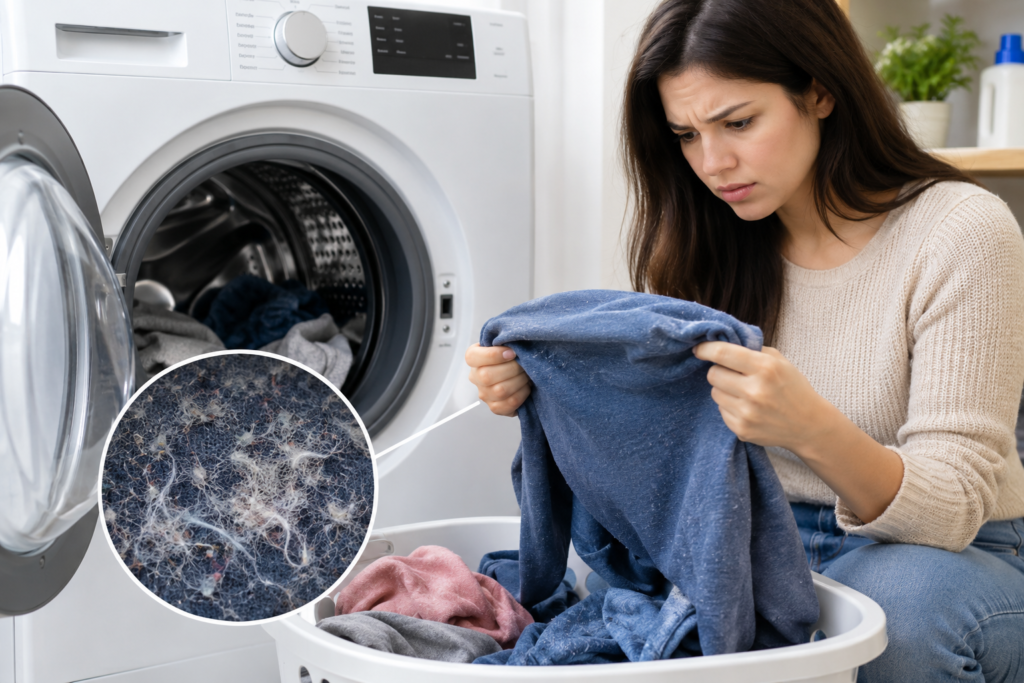
 A single 6-kilogram load of laundry can shed more than 728000 fibres from the fabrics in the drum. Studies on microfibres from the laundry show that washing machines pull fibres loose as clothes tumble, vibrate and rub against each other. The lost fibres do not always stay on the clothes themselves, so they usually leave the machine as lint, dust in the lint filter, and wastewater. Hotter water, harder mechanical action, and using more detergent than needed can all push fibre loss higher. So how you wash your clothes is important. Overfilled rum. Leaving zippers open, using aggressive spin cycles, and overdoing detergent can all speed up fading, little surface balls (pilling), stretching out of shape, and fibre shedding.
This article explains how a washing machine can be damaging to clothes, what signs to notice, and what practical changes can help clothes last longer.
What Happens When You Use Too Much Laundry Detergent
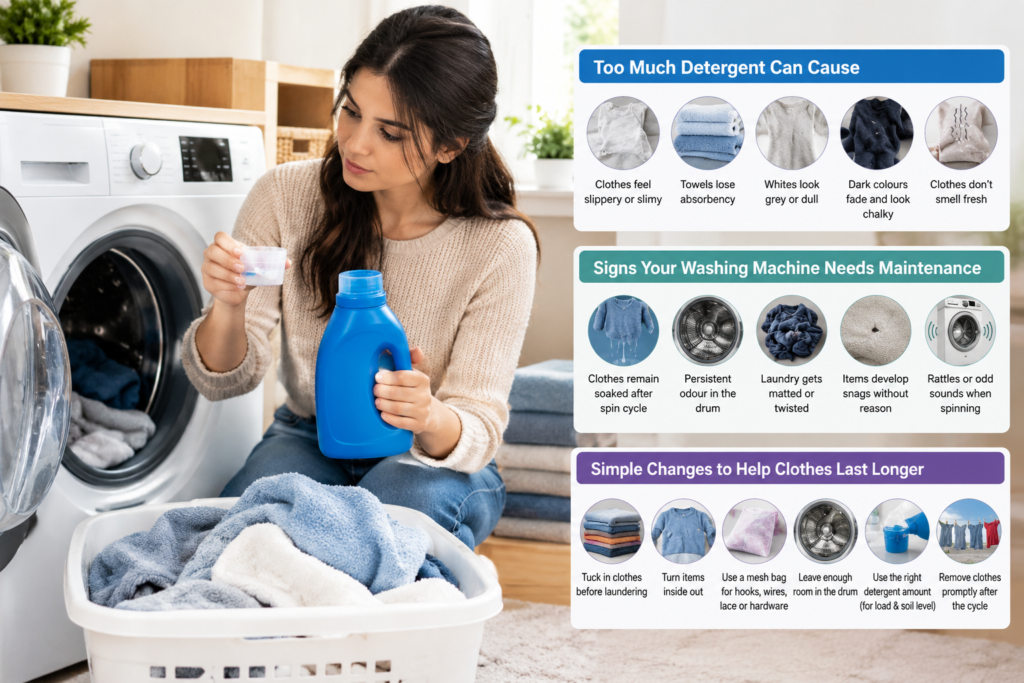
Using extra detergent feels like a way to get clothes cleaner. It often does the opposite. Some detergent residues can build up on clothes. That residue can trap dirt, cause towels to be stiff, and so on, as well as the actual off smell that lingers after the laundry. Too much detergent doesn’t mean you’ll get clean clothes… it can also add more dirt!
Look out for these symptoms:
- Washing clothes makes the items slippery or slimy.
- Towels are no longer water absorbent.
- Whites look grey or dull.
- The dark colours are faded and chalky.
- Clothes are not fresh-smelling even after drying.
If these sound familiar, reduce the detergent amount before assuming the washer or clothing is the problem. Use the measuring line on the cap; change in accordance with the load size and soil level and not habit.
Signs Your Washing Machine Needs Maintenance
Clothes that remain soaked after the spin cycle can point to a spin-performance issue. Items that come out twisted are another sign that something may be wrong and that you need to readjust the item inside the washer.
A couple of pieces of advice to keep an eye out for:
Clothes are dripping wet even after a full spin cycle.
The drum has a persistent odour.
Laundry always gets matted or twisted.
Items develop snags without any obvious cause.
The washer rattles or makes odd sounds when spinning.
If these issues persist following load size adjustment, detergent and cycle adjustments, the machine may require maintenance.
Simple Changes to Help Clothes Last Longer
There is no need for a complex washing machine setup. There are some little habits that can make a difference.
Tuck in clothes before laundering. Turn little things inside out. For anything that has hooks, wires, lace, or hardware, use a mesh bag. Leave enough room in the drum for clothes to move. Match water level to fabric, balancing the wash cycle and the spin level. Follow the recommended quantity of detergent and promptly remove clothes at the end of the cycle.
All of these are not very time-consuming. They work together to enhance rinsing and help clothes stay in shape and colour.
Which Laundry Items Need a Larger Washing Machine?
It’s just that some products cannot fit into a small home washer. Large quantities of pet beds, blankets, comforters, family laundry, or any type of laundry can be packed into the machine without providing sufficient room for them to rest and rinse.
This is where a laundromat having bigger machines can aid. CoinLess Laundry can help with large commercial laundry machines that are accessible to you as a self-service customer, in over 50 locations in Arizona. CoinLess Laundry also has drop-off wash and fold at many locations throughout Arizona for those who would prefer not to deal with the process.
Using a larger washer does not just save time. It can provide adequate space for bedding, towels, and large amounts for washing and rinsing.
Final Words
CoinLess Laundry offers wash-and-fold services across Arizona. We have washing machines for larger loads and bulkier clothes that a home washer won’t be able to handle. We provide you with practical ways to wash your clothes, including bedding, towels, linens, and family laundry, so that you don’t have to stuff everything into a home washer and risk damaging your clothes.
Visit your nearest Coinless Laundry location to use a larger washer, or ask about wash and fold services and when you want your laundry washed, dried, and folded for you.
Frequently Asked Questions (FAQs)
Q.1. Can a washer ruin clothes even when it’s working correctly?
Washing machines can ruin garments if you overload them, leave zippers open, use improper spin cycles, and/or use too much detergent.
Q.2. Why do my clothes have little holes in them after washing?
Things such as zippers, hooks on clothing, undergarment wires, and other sharp objects snag the fabric and cause holes. To prevent this, put zippers facing down and put them in a mesh bag.
Q.3. Can overloading a washer ruin clothes?
Yes, overloading can ruin garments because clothes need to be able to move freely in the washer, the detergent won’t rinse out as well, and there is more friction between the clothes.
Q.4. Why do my towels feel stiff after washing?
Stiff towels are often caused by something like the wrong detergent, water hardness, fabric softener, or when there is too much laundry in the washer at once.
Q.5. Should I zip up my clothes before putting them in the washer?
Yes, because it helps prevent the zipper from snagging other clothes or the washer itself.
Q.6. How do I know if I used too much detergent?
If your clothes are slippery, have a white film on them, are faded, smell strongly, or if your towels aren’t as absorbent as they used to be.
Q.7. Can washers ruin delicate clothing with a high spin cycle?
Yes, high spin cycles can ruin delicate clothes, clothes made of knits and stretchy materials, and activewear.
Q.8. When should I use a bigger washer?
Use a larger washer for things like comforters, blankets, pet bedding, when you have an overabundance of laundry, or for things that can’t fit or move freely in a home washer.