
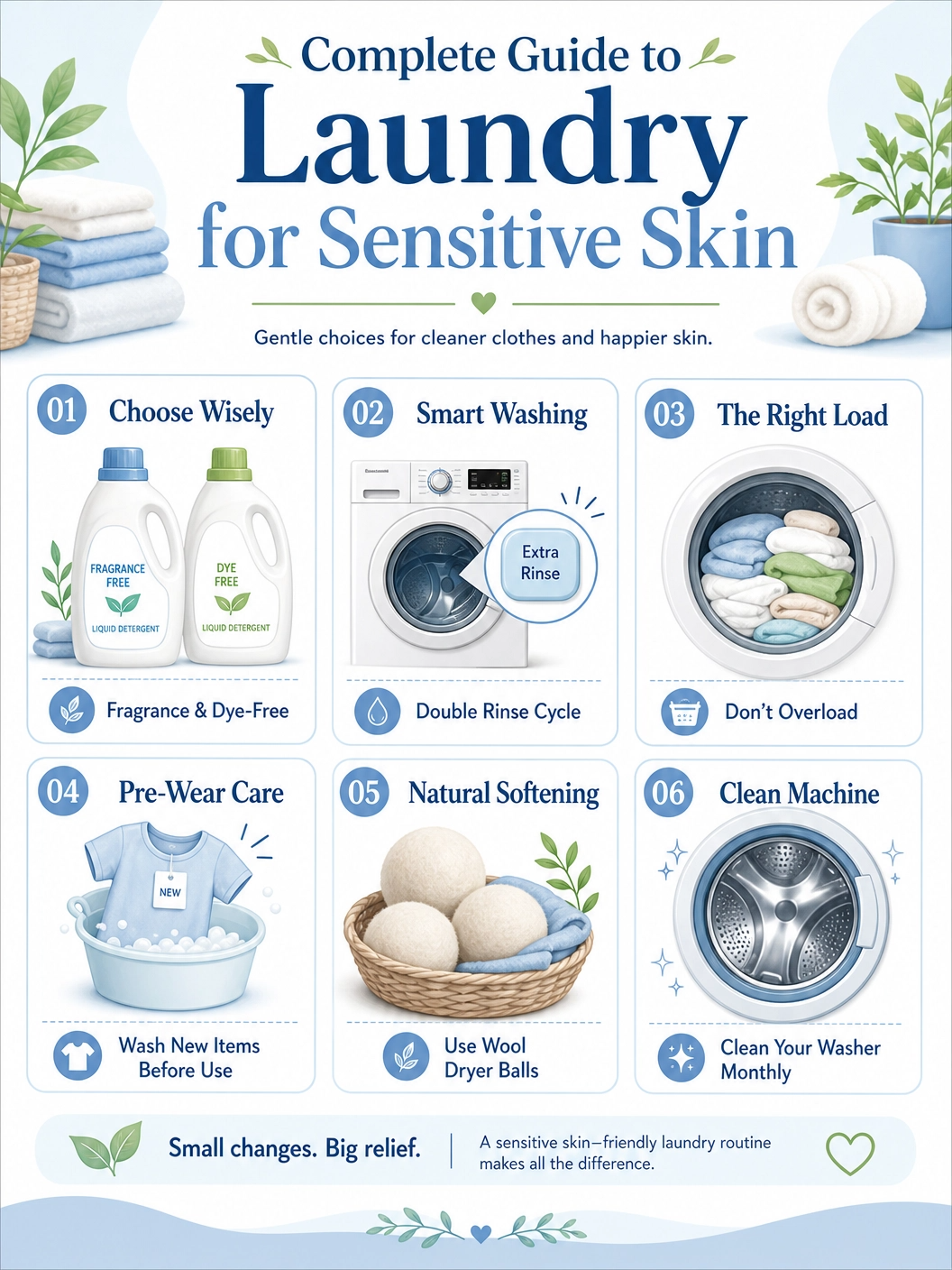
If you’ve ever put on a freshly washed shirt only to experience itching, redness, dryness, or irritation a few hours later, your laundry routine may be part of the problem. Laundry for sensitive skin goes beyond simply cleaning clothes; it focuses on creating a fabric care routine that minimizes exposure to potential irritants while keeping garments fresh, soft, and comfortable to wear.
Many people assume skincare products are the primary cause of skin sensitivity, but the reality is that fabrics spend hours in direct contact with our bodies every day. Residual detergents, fragrances, dyes, fabric softeners, and even improper washing techniques can contribute to discomfort, especially for those with sensitive skin, allergies, eczema, or similar concerns.
The good news is that a few thoughtful changes can make a significant difference. Whether you’re washing clothes at home or exploring hypoallergenic laundry services, understanding how laundry affects your skin is the first step toward a more comfortable lifestyle.
Why Laundry Matters More Than You Think
Most people think of laundry as a cleaning process. In reality, it’s also a skin-contact process.
Every shirt, pair of pajamas, towel, bedsheet, and blanket you use spends hours touching your skin. If those fabrics contain detergent residue, fragrances, harsh chemicals, or trapped allergens, your skin may react accordingly.
For individuals with sensitive skin, even minor irritants can lead to:
- Itching
- Dryness
- Redness
- Rashes
- Skin discomfort
- Increased sensitivity over time
This is why laundry for sensitive skin requires a different approach than standard laundry routines.
The goal isn’t simply removing dirt and stains. It’s creating fabrics that are genuinely comfortable against the skin.
Understanding What Causes Laundry-Related Skin Irritation
Before discussing solutions, it helps to understand the most common triggers.
Fragrances
Many laundry products contain strong perfumes designed to leave clothes smelling “fresh.”
While pleasant for some people, fragrances are among the most common causes of skin irritation. Artificial scents can remain embedded in fabric fibers long after washing, creating prolonged skin exposure throughout the day.
Detergent Residue
More detergent does not equal cleaner clothes. In fact, excess detergent often fails to rinse away completely.
The result?
A layer of chemical residue remains trapped within fabric fibers and repeatedly comes into contact with your skin. This is one of the most overlooked issues in laundry for sensitive skin.
Fabric Softeners
Fabric softeners may make clothes feel smoother initially, but many contain fragrances, preservatives, and chemical coatings that remain on garments after washing.
For sensitive individuals, these additives can create unnecessary irritation.
Dyes and Additives
Some detergents contain brighteners, dyes, and specialty additives designed to improve appearance rather than cleanliness.
Unfortunately, these ingredients can increase the likelihood of skin reactions.
Trapped Allergens
Laundry doesn’t always remove everything.
Pet dander, pollen, dust mites, and environmental allergens can remain in fabrics if washing practices aren’t optimized. For people with allergies or highly reactive skin, these hidden particles can become a constant source of irritation.
What Is Hypoallergenic Laundry?
When exploring laundry for sensitive skin, you’ll often come across the term hypoallergenic laundry. In simple terms, hypoallergenic laundry refers to washing practices designed to reduce exposure to ingredients and residues that commonly trigger skin irritation, allergies, or discomfort.
Unlike traditional laundry routines that may prioritize fragrance or stain-fighting additives, hypoallergenic laundry focuses on keeping fabrics as gentle and skin-friendly as possible. This typically involves using:
- Fragrance-free products
- Dye-free detergents
- Mild, gentle cleaning agents
- Extra rinse cycles to remove residue
- Reduced exposure to harsh chemicals
- Fabric-safe washing and drying methods
The goal isn’t to make clothes smell stronger or look brighter. Instead, it’s about ensuring fabrics come out clean while leaving behind as few potential irritants as possible. For people with sensitive skin, eczema, allergies, or recurring irritation, this approach can make everyday clothing, bedding, and towels significantly more comfortable to use.
The Right Approach
1. Choosing the right detergent:
Detergent selection is one of the most important decisions you can make. Not all detergents are created equally.
Look For:
- Fragrance-free formulas
- Dye-free products
- Dermatologist-tested options
- Hypoallergenic certifications
Avoid:
- Heavy perfumes
- Brightening agents
- Harsh chemical additives
- Excessively concentrated products, unless properly measured
When it comes to laundry for sensitive skin, simpler is often better.
The Truth About Using More Detergent
Many people believe extra detergent creates cleaner laundry. Unfortunately, the opposite is often true. Too much detergent can:
- Leave residue behind
- Make fabrics feel stiff
- Reduce breathability
- Increase skin irritation
Modern detergents are highly concentrated. Using the recommended amount or sometimes even slightly less is often sufficient. This small adjustment can dramatically improve comfort levels.
2. Extra Rinse Cycles
One of the easiest improvements you can make involves using an extra rinse cycle. This additional rinse helps remove:
- Detergent residue
- Dirt particles
- Allergens
- Chemical traces
For people with highly reactive skin, an extra rinse can be surprisingly effective. Many dermatologists recommend this simple step as part of a skin-friendly laundry routine.
3. Water Temperature
The ideal temperature depends on the fabric and the cleaning objective.
Cold Water
Best for:
- Everyday clothing
- Delicate fabrics
- Color preservation
Benefits:
- Less fiber damage
- Reduced irritation risk
- Better fabric longevity
Warm Water
Best for:
- Towels
- Bedding
- Moderate soil removal
Hot Water
Useful occasionally for:
- Sanitization
- Certain allergy concerns
However, excessive heat can damage fabrics and reduce softness over time. For most laundry for sensitive skin situations, cold or warm water is sufficient.
Key Considerations for Sensitive Skin
Bedding:
Many people focus on clothing while overlooking bedding. Yet your sheets and pillowcases spend more time touching your skin than almost anything else.
If you struggle with irritation, prioritize:
- Weekly sheet washing
- Regular pillowcase cleaning
- Fragrance-free detergents
- Thorough rinsing
Clean bedding often produces noticeable improvements in comfort and skin health.
Towels
Towels can easily trap:
- Moisture
- Detergent residue
- Skin oils
- Allergens
Ironically, the products meant to soften towels often make them worse for sensitive skin.
To maintain skin-friendly towels:
- Skip fabric softeners
- Use hypoallergenic detergent
- Avoid overloading machines
- Rinse thoroughly
The result is softer, more absorbent towels that are gentler on your skin.
Children’s Clothing
Children often have more reactive skin than adults. Their clothing deserves extra attention. A hypoallergenic laundry routine for children’s garments should include:
- Fragrance-free detergent
- Minimal additives
- Extra rinse cycles
- Gentle washing methods
These simple precautions help reduce unnecessary exposure to potential irritants.
How Often Should You Wash Clothes?
Overwashing can be just as problematic as underwashing. Excessive washing causes:
- Fabric breakdown
- Increased detergent exposure
- Reduced softness
- Shorter garment lifespan
Not every item needs washing after a single wear.
Items like sweaters, jackets, and some casual clothing can often be worn multiple times before laundering. A balanced approach supports both skin comfort and fabric longevity.
Professional Hypoallergenic Laundry Services
For individuals and families dealing with sensitive skin, allergies, or simply busy schedules, professional hypoallergenic laundry services can provide an extra layer of convenience and peace of mind. While many people successfully manage laundry for sensitive skin at home, professional services offer specialized processes designed to minimize potential irritants and maintain consistent fabric care.
These services often focus on:
- Sensitive-skin-friendly detergents
- Thorough rinsing systems to remove residue
- Carefully controlled washing and drying methods
- Consistent fabric care standards across every load
Professional hypoallergenic laundering can be particularly beneficial for items that come into frequent contact with the skin, such as bedding, towels, children’s clothing, and delicate garments. It can also be a practical solution for households where allergies or skin sensitivities require extra attention to cleanliness and fabric care.
While it may not be necessary for everyone, professional hypoallergenic laundry services offer a reliable option for those looking to simplify their routine while maintaining a more skin-friendly laundry environment.
Common Laundry Mistakes That Trigger Skin Problems
Even with good intentions, certain habits can undermine your efforts.
Using Too Much Detergent
More product often means more residue.
Overloading the Washer
Crowded loads prevent proper rinsing.
Using Heavily Scented Products
Fragrances are a common trigger.
Ignoring Care Labels
Improper washing damages fabrics and affects comfort.
Leaving Laundry Damp
Moisture encourages odor and microbial growth.
Avoiding these mistakes can significantly improve your laundry routine for sensitive skin.
Building a Skin-Friendly Laundry Routine
If you’re starting from scratch, keep things simple.
A practical routine might look like this:
- Choose a fragrance-free, dye-free detergent.
- Use the correct amount.
- Wash with cold or warm water.
- Add an extra rinse cycle.
- Avoid fabric softeners.
- Dry fabrics thoroughly.
- Wash bedding regularly.
These steps don’t require expensive products or complicated systems.
Consistency matters more than perfection.
Conclusion
Creating an effective routine for laundry for sensitive skin isn’t about buying dozens of specialty products or completely reinventing your laundry habits. It’s about understanding what your skin comes into contact with every day and making thoughtful choices that reduce unnecessary irritation.
From choosing fragrance-free detergents and using extra rinse cycles to adopting hypoallergenic laundry practices, small adjustments can make a remarkable difference. The goal isn’t simply cleaner clothes; it’s cleaner, gentler fabrics that support comfort from morning to night.
When your laundry routine works with your skin instead of against it, every shirt, towel, bedsheet, and blanket becomes a little more comfortable. And sometimes, those small daily comforts add up to the biggest improvements of all.