
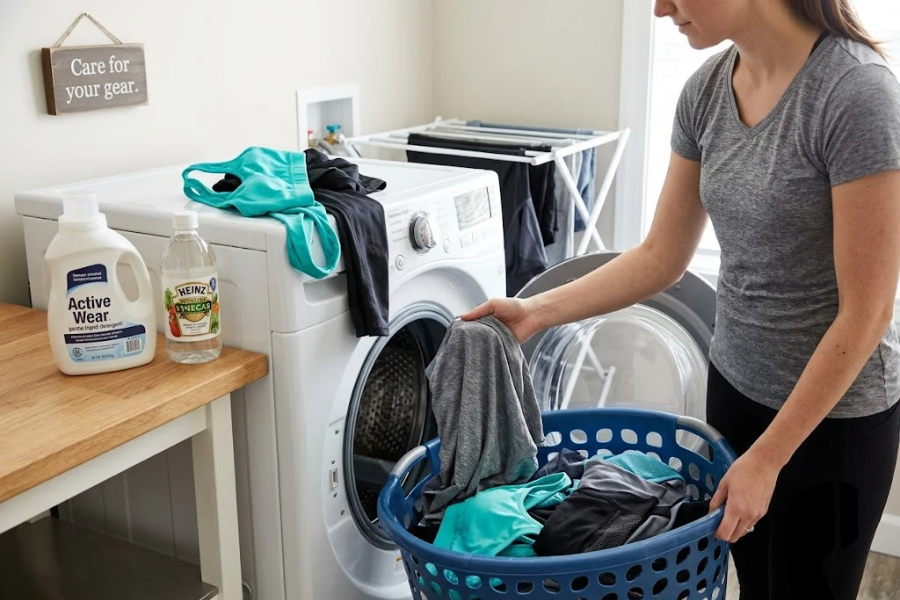
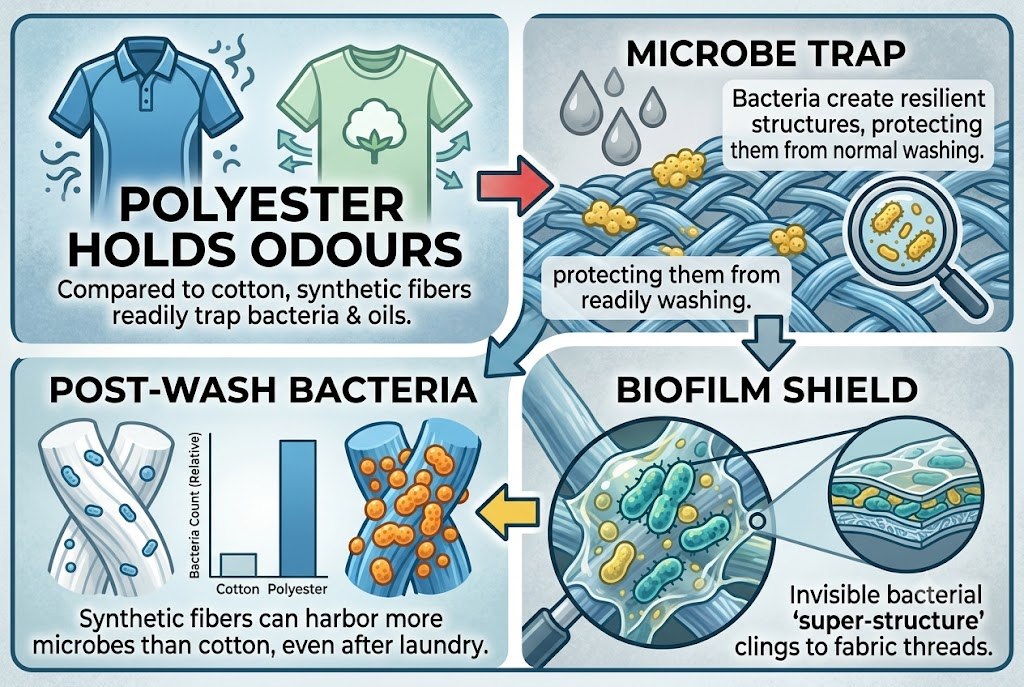
Polyester gym/sports clothing tends to trap bacteria and natural skin oils more stubbornly than cotton. How you wash your gym and sports clothes plays a big part in it. These residues can remain even after a normal wash cycle; the synthetic fibres create an environment where odour-causing substances cling more tightly, and as a result, the fabric may not smell fully fresh despite having been cleaned. The trapped bacteria and oils become active once moisture and warmth come into contact with them. The temporarily clean scent after washing therefore does not stay for long until the underlying problem has been fully removed. Allowing sweaty gym and sports wear to sit in a closed bag, a vehicle, or a laundry basket while still damp gives bacteria and oils extra hours to embed themselves.
Simply adding a large amount of detergent is not an effective solution for removing the stubborn smells from synthetic workout clothing. In some cases, it can even make the situation worse by leaving its own residues behind. Using too much detergent, adding fabric softener, or drying the clothes at high temperatures can deposit leftover substances inside the moisture-wicking material.
This blog post explains washing methods that remove odor while also protecting the fabric’s elastic qualities and shape.
Why Do Polyester Gym Clothes Hold Odours?
Polyester is used very frequently in sportswear because the fabric is designed to pull moisture away from the skin and move it to the surface where it can evaporate. This moisture-wicking property keeps the wearer feeling drier during exercise. But the same properties also affect how it reacts with sweat and oil. Polyester takes in a greater amount of the natural skin oil known as sebum and other substances found in sweat. These absorbed materials provide a food source for the bacteria that create unpleasant smells. The synthetic fibres hold onto these compounds more readily than natural cotton fibres. Studies show that polyester clothing contains a larger number of bacteria once a standard wash cycle is finished than a cotton item. The synthetic material appears to retain more of the microbes that survive the laundry process.
Bacteria are capable of creating thin protective layers called biofilms within the fabric structure, and these layers shield the microbes from ordinary detergent and water. Drying gym clothes at high temperatures can weaken the elastic threads that give the garments their stretch and shape. This leads to a looser or distorted fit after repeated exposure.
Stop Doing These Things
Do not use fabric softener.
Performance garments might lose wicking qualities for a brief period of time after the use of fabric softener. Avoid it for polyester shirts, leggings, sports bras, and moisture-wicking socks.
Do not overload the washer.
When washing, please don’t overload the washing machine.
Clothing for swimming must have ample room to flow in the water. It is not possible to rinse a packed load properly.
Do NOT Wash Gym Towels With Activewear
Towels generate lint and rub. Wash them on their own from polyester clothes of shirts, leggings and sports bras.
Do not use high heat by default.
Leopard leggings, sports bras, or compression wear may not fit well due to damage to elastic fibers sustained by high heat. Air dry, or if it is labeled for dry cleaning (can be used with low-temperature heat).
Do not rely on scent boosters.
Avoid using smoke or other fillers, as they can be distracting.
Fragrance might help make the clothes smell good for a while, but it does not resolve the issue of buildup that causes the smell.
The Right Way to Wash Smelly Gym Clothes
Air them out first
Never leave wet health club attire in a health club bag, locker, or hamper. Hang as soon as possible.
Turn them inside out
Most body oil, deodorant residue, and sweat are located on the inside of the garment.
Sort by fabric
Keep these separate:
- Moisture-wicking activewear, polyester and nylon.
- T-shirts and sweatshirts made from cotton. Cotton T-shirts and cotton sweatshirts.
- Gym towels
- Dusty hiking clothes
- Lightweight and zipped or mesh items
Use less detergent
Use the amount calculated for the load size that is to be applied. The more detergent you use, the dirtier the clothes will become.
Wash cold
Oftentimes, simply swimming in cold water will be gentler to manmade gear and will aid in the maintenance of stretch and form.
Use an extra rinse
Use a second “rinse” (concentrated solid detergent).
Use a washer if one is provided. This assists in getting rid of the detergent residue from synthetic fabrics.
Low or air dry (dry as in wood herds)
If possible, air dry. When drying clothes, use LOW heat and take them out of the dryer before they are dry.
When Gym Clothes Need a Reset Wash
If any of the following occur, then a normal wash may not be sufficient:
- The shirt has a good odor when it is dry, but retains the odor after perspiring.
- The fabric is tight, oily, or sticky.
- You have used fabric softener.
- An excess quantity of detergent has been applied.
- The clothes were left in a gym bag or car for over 24 hours.
Do a vinegar pre-soak
- Fill a sink or bucket with cold water.
- Mix 1 part white vinegar and 4 parts water.
- Leave the clothes in for 20-30 minutes.
- Wash with a little detergent as usual.
- If available, use an additional rinse.
- Never combine vinegar with any other chemicals for cleaning, such as bleach.
Treat problem areas first.
First, attend to problem areas to get them under control.
Focus on:
- Underarms
- Collars
- Waistbands
- Sports-bra bands
- Socks
- Compression shorts
Make sure the fabric is damp, rub the area, and then wash it down with a little of the liquid detergent.
When to Use a Laundromat Instead
Not every workout shirt requires a laundromat! However, it’s better if you are given a ‘go/no-go’ decision.
A bigger commercial washer is required when:
- You have several sets of activewear and towels as well as hiking clothing.
- The larger items in your house are too large to fit into your household washing machine.
- Gym towels should be washed separately from the technical wear.
- You don’t want your home machine to get overloaded.
- Washing uniforms for a team, fitness class, or sports group.
The size of the washer provides more space for activewear to move around, rinse, and shed detergent buildup. This is important because if it’s heavy, it can leave residue stuck inside the fabric.
CoinLess Laundry is helpful here to pick a machine size to fit the load, instead of fitting everything into a home laundry machine. Clothes can also be kept away from the moisture-wicking gym towels, creating material protection and better rinsing.
What to Bring for a Gym-Clothes Laundry Trip
- A folding laundry bag featuring a mesh design to store delicate items like sports bras, socks, and other clothes.
- A small – but not excessive – amount of liquid detergent.
- A gym towel bag (separate from the other bags)
- A small bag to store clothes that are shabby or smoky.
- Laundry card or accepted form of payment
If you are washing several loads, plan for:
- A single load for technical activewear.
- For gym towels, there will be one load.
- For cotton clothes: 1 load.
- Takes only one load of heavily dusty hiking gear
How to Keep Gym Clothes From Getting Smelly Again
- Wash base layers after they get sweaty.
- Allow outsides to dry before re-wear.
- Empty still equipment and gym bags more frequently.
- Dry items thoroughly before putting them away.
- Avoid using scent enhancers.
- Do not use fabric softener on technical fabrics.
Find Your Next Laundromats With CoinLess Laundry in Arizona
Persistent odours in activewear are typically best addressed by giving the garments a thorough cleaning reset. Extra soap and detergent do not solve the underlying tendency of the fabric to hold bacteria and oils.
Bring your activewear to CoinLess Laundry in Arizona and wash it without cramming everything into a home machine. Contact us at 480-651-4319 or fill out this form and mention your requirements and queries: https://coinlesslaundry.com/contact/
Frequently Asked Questions (FAQs)
Q.1. Why do my gym clothes always smell worse when it gets warm?
Warm, moist conditions can make the trapped scent molecules more pungent. It’s a sign that some of the odor-causing residue has been left behind in the fabric.
Q.2. Can I toss my sports bras in with my everyday clothes?
You can, but it’s best to wash your activewear with other lightweight items (not with towels or jeans).
Q.3. Should I put a fabric softener sheet in with my workout clothes?
No. It will actually strip the moisture-wicking properties from the fabric.
Q.4. How often should I be washing my gym clothes?
As soon as you can after exercising. A sweaty T-shirt or sports bra worn next to your skin will require more rinsing cycles to get out sweat and odor-producing bacteria. And always wash your outerwear when you’re done with it, to free up scent-choked fabric for the next wearer.
Q.5. Does the Phoenix heat affect gym clothes?
It doesn’t hurt the fabric, but it does increase perspiration and the amount of time your clothes are exposed to sweat, thus making body-odor-causing bacteria more prevalent.
Q.6. Can a laundromat help with my gym clothes?
If you have a big load of workout clothes, towels, and rags to clean at once, doing it at a laundromat can help. Those large commercial machines agitate more gently, allowing more thorough rinsing of each load.