
Polyester is a thermoplastic synthetic fibre that softens or changes shape when exposed to enough heat. Although a normal hot wash won’t melt polyester clothes, repeatedly washing them in high heat can still damage things like fabric finishes, elastic components, garment shape, and long-term wear. How much damage happens depends on several factors: how the garments are made, how hot the water is, what detergent you use, and overall washing conditions. This is particularly relevant when you’re washing polyester items that contain stretch fibres: leggings, sports bras, uniforms, jackets, and other stretchy garments. Polyester also presents other laundry problems. Just because polyester dries fast doesn’t mean it easily releases sweat, body oils, or smells. Poor washing conditions can leave residue behind, which is why polyester clothes still smell even after a complete wash cycle. Knowing how polyester reacts to heat, detergent, and the movement of the washing machine makes it easier to care for these clothes properly.
One study found that moving from a 40°C, 85-minute wash to a 15°C, 30-minute wash reduced microfibre generation by 30 percent. Another review found that increasing washing temperature from 30°C to 40°C increased polyester microfibre release. This blog helps you decide when it might be better to use a larger commercial machine or a wash-and-fold service.
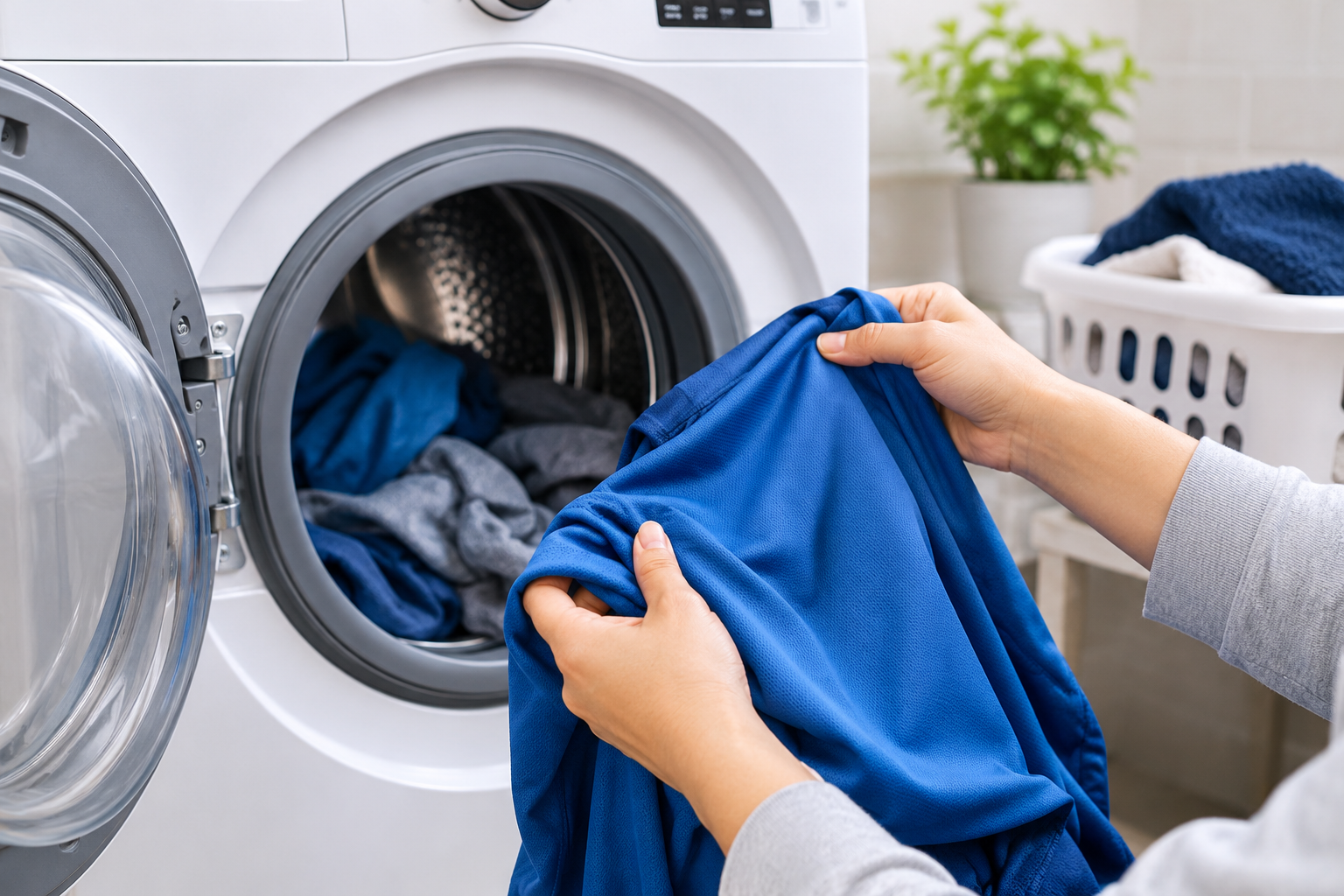
What Is Polyester and How Does It Wash Differently from Cotton?
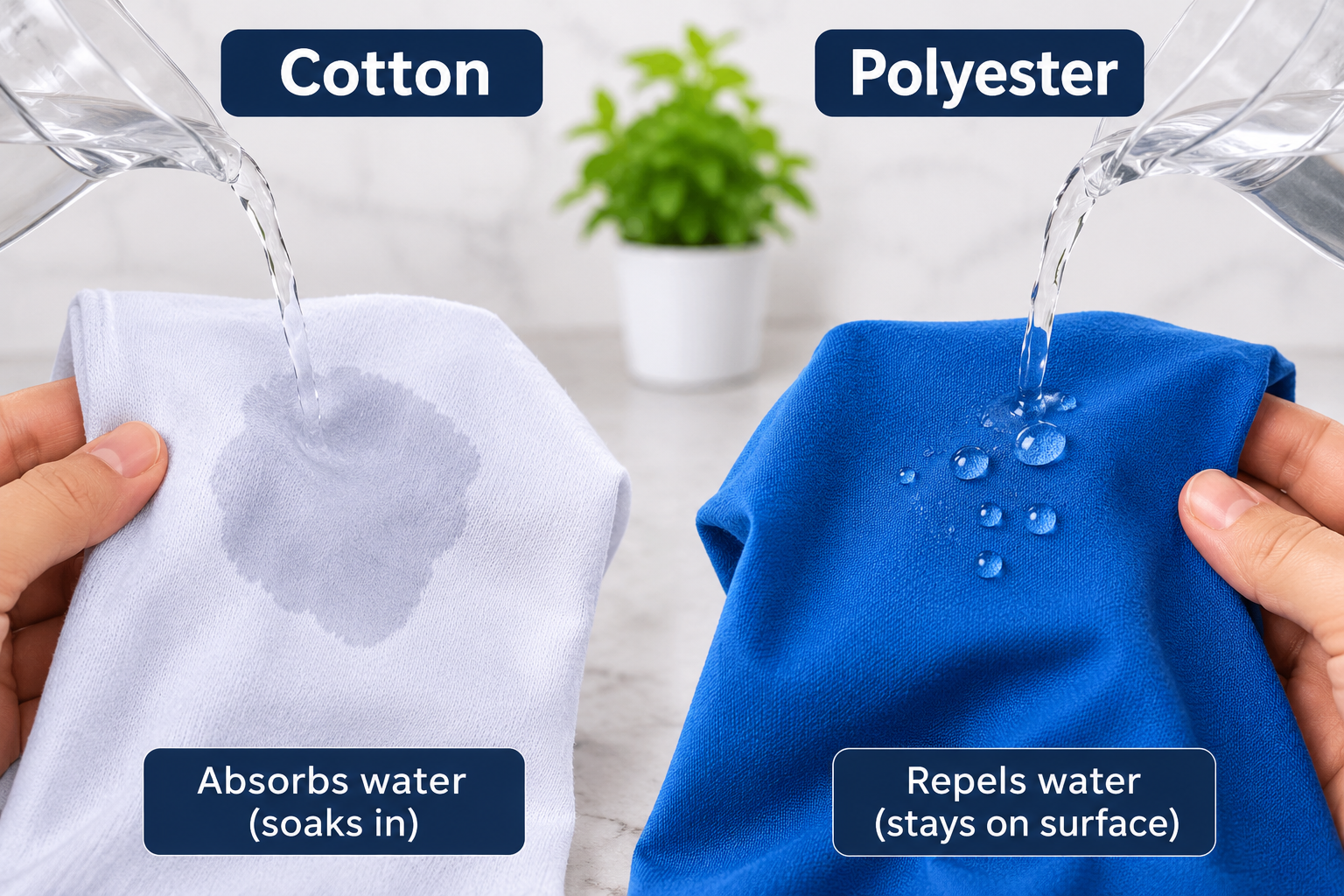
Polyester is a synthetic fibre created from chemical compounds called polymers, most commonly polyethylene terephthalate (PET). Cotton is a natural plant fiber that soaks up water easily. Polyester, on the other hand, has a rather hydrophobic surface. Water does not get soaked into polyester fibres the way it does with cotton. This water-resistant nature is the reason polyester has several well-known traits. Polyester absorbs less moisture, dries fast, resists wrinkles, and holds its shape well. Clothing brands like polyester because it’s durable, easy to care for, and holds its color well.
Cotton fibres are built differently from polyester. Cotton has chemical groups (called hydroxyl groups) that attract and hold onto water. Polyester doesn’t have as many of those water-attracting groups, so moisture tends to stay on the surface and move across it instead of soaking in. This structural difference is why cotton and polyester behave differently when you wash them. Cotton can absorb sweat and water deep into the fibre itself. Polyester mostly moves moisture across the surface of the fabric so it can evaporate. That’s why polyester works well for activewear, but it also makes it harder to fully remove body oils and smells.
How to Wash Polyester Without Damaging It
Polyester fabrics can be very durable, but they must be washed properly, or they will become tough. The first step in using polyester laundry care is to know about the garment and not choose the hottest wash cycle.
A light fabric shirt made of polyester, a fleece blanket, and a pair of compression leggings can all utilize polyester, yet all have different qualifications and upkeep guidelines.
Here is a practical approach to washing them.
- Check the care label before selecting a temperature
Follow the instructions of the manufacturer. Look for washing temperature, drying instructions, and possible restrictions on bleach or fabric softener.
In most instances, the Federal Trade Commission’s Care Labeling Rule specifies brands’ obligations to include information about their care instructions for covered products. These instructions are based on all the parts of the garment, rather than just the major fiber used. The treatment is different for a polyester garment with elastic panels, decorative finishes, or special coatings in comparison to a simple polyester shirt.
Even if the article appears solid, machine wash any garments that the label suggests may be washed cold.
- Choose cold or warm water when appropriate
Synthetic fibers, polyester shirts, leggings, sports bras, and other polyester fiber blends can be safely washed with cold or warm water on the garment’s care instructions.
Cold water will help to control any unnecessary exposure to heat and will help control the release of microfibres depending on the conditions of washing. When warm water is suitable, it is recommended for body oils intended for heavy garments. It is also recommended for heavy body oils or for daily soil use.
Don’t necessarily use the hottest setting if it has been worn a lot of times.
To avoid this error, measure the detergent amount and do not add any more of it.
- Measure detergent instead of adding extra
Always use the detergent that is appropriate for the soil type and fabric.
If you’re taking lightly colored materials to the gym, a sportswear detergent specifically designed for workout attire could help clean sweat and oils. Use the recommended dosage; don’t add more detergent to get a better smell.
For regularly washed polyester gymwear, don’t keep sweaty clothes in a closed gym bag for an extended time. Do not wash until they can dry or be ventilated.
- Skip fabric softener for most activewear
Performance fabrics can be easily conditioned with the use of a fabric softener. This could affect their moisture management characteristics and lead to residue.
In case of daily-use polyester swimwear, DO NOT use detergent that contains fabric softening agents. For clothes with special finishes, verify with the manufacturer’s instructions.
- Turn garments inside out
Washing poly clothes inside out will make sure that any sweat, deodorant, or skin oils that have gathered in the area are exposed to the wash solution.
It’s especially helpful for:
– Leggings that have moisture buildup around the waistband.
– Sports bras that have sweat under the under/fastener.
– Running clothes that trap perspiration from the body (deodorant buildup).
– Compression clothing worn during long workouts.
Also, it cuts down on direct friction on the garment’s visible outer surface.
- Use mesh bags for delicate garments
For delicate polyester clothes and clothes with exposed elastic, mesh laundry bags offer an additional measure of protection.
Keep individually small compression garments and lightweight synthetic clothing in proper bags. Do not fill a bag to the point where water is unable to flow through the contents.
- Avoid high dryer heat
Drying temperature deserves as much attention as washing temperature.
Very high drying temperatures could result in extra stress on the fibers, as well as possible changes in the fabric finishes. It can also cause dimensional changes and surface changes to garments with repeated laundering.
For compression leggings, sports bras, swimwear, and comps, air drying makes good sense. When laundering other polyester products, follow the care label instructions for laundry in the dryer.
Take clothes off as quickly as possible after drying to minimise unnecessary exposure.
When a Home Washer Is Not Enough for Polyester Laundry
A home washing machine works perfectly well for ordinary polyester laundry when the load fits comfortably, and the machine can clean and rinse everything properly.
The issue can arise when there is too much or too large a load of laundry to wash.
When clothes are overloaded, the space for them to move around diminishes. The efficiency of detergent distribution diminishes, water circulation can be affected, and the rinse cycle might leave a film. This comes into play particularly with households that wash multiple synthetics frequently.
Frequent gym clothes: In just a couple of days, a regular jogger can have a number of pairs of leggings and sports bras, one running shirt, and a few exercise towels. This will make it difficult to move and rinse all items in one load.
Work uniforms: Polyester uniforms for long shifts can trap body fat, sweat, deodorant, and everyday dirt. When multiple family members or staff wear uniforms that require regular laundering, it can quickly become cumbersome.
Bedding and blankets: Polyester sheets, fleece blankets, and synthetic comforters require adequate drum space. If you’re using a comforter that just doesn’t fit inside a home washer, it might not fit for an even wash and rinse.
Comforters with synthetic filling: They tend to become heavy when wet. They may bunch together if the washer is too small, causing cleaning and rinsing to be difficult.
Large towel loads: Towel loads are heavy and contain a lot of water when they’re washed. Having a fully loaded drum of towels and clothes can limit movement within a smaller-sized drum.
Family laundry: Clothing, bedding, towels, uniforms, and tennis wear should be washed in a family batch, which is different from the small h home washing machines.
If the washer’s size is increased, the capacity for appropriate loads to circulate through the washing process also increases. This can enhance detergent and water flow, allowing a more accurate loading of the detergent and water into the machine.
It must be noted that being a larger machine doesn’t justify filling the drum with an endless amount of clothes. The proper load size still depends on the manufacturer and the type of laundromat.
Choose CoinLess Laundry in Arizona for Your Laundry Needs
If you live in the Phoenix area and regularly deal with loads of activewear, work uniforms, polyester bedding, or big loads of laundry in general, CoinLess Laundry offers service in 55+ locations. Our bigger-size machines give you enough space to wash properly sized loads ( instead of overloading the smaller machine). Some locations also offer wash-and-fold services for people who would rather leave the laundry to someone else.
Need a better way to wash polyester, activewear, or bulky bedding? Stop by CoinLess Laundry and see what will work for you. Visit a nearby CoinLess Laundry location for self-service machines and card-operated payments.
Find a CoinLess Laundry near you and make laundry day easier. Frequently Asked Questions (FAQs)
Q.1. Can you wash polyester in hot water?
Some polyester items that are very sturdy can be washed in hot water, but it isn’t ideal for activewear, stretchy, and elasticated items.
Q.2. Does polyester shrink when washed in hot water?
Pure polyester doesn’t usually shrink as cotton does. However, if a polyester mixture has been washed in hot water and high heat, this can cause issues.
Q.3. Why does my polyester clothing smell?
Polyester can trap body oils, sweat, and bacteria in the fibres. This can become worse if too much detergent or fabric softener is used.
Q.4. Is it better to wash polyester in cold water?
Most polyester clothing can be washed in cold water. This reduces the heat it’s exposed to and helps maintain colour, elasticity, and texture.
Q.5. Should I use fabric softener on polyester?
It’s usually best to avoid using fabric softener on polyester, especially activewear. This can cause a build-up on the synthetic fibres and reduce breathability.
Q.6. How do I get rid of odour from polyester gym clothing?
Washing in cold or warm water with the right amount of detergent will help. Avoid using fabric softener and overloading the washing machine. If there is still an issue with odour, a larger washing machine will help rinse better.
Q.7. Can you wash polyester bedding in hot water?
Check the care label. Some can be washed in warm water; however, it’s not always recommended to wash in hot water. This can put more strain on the fibres.